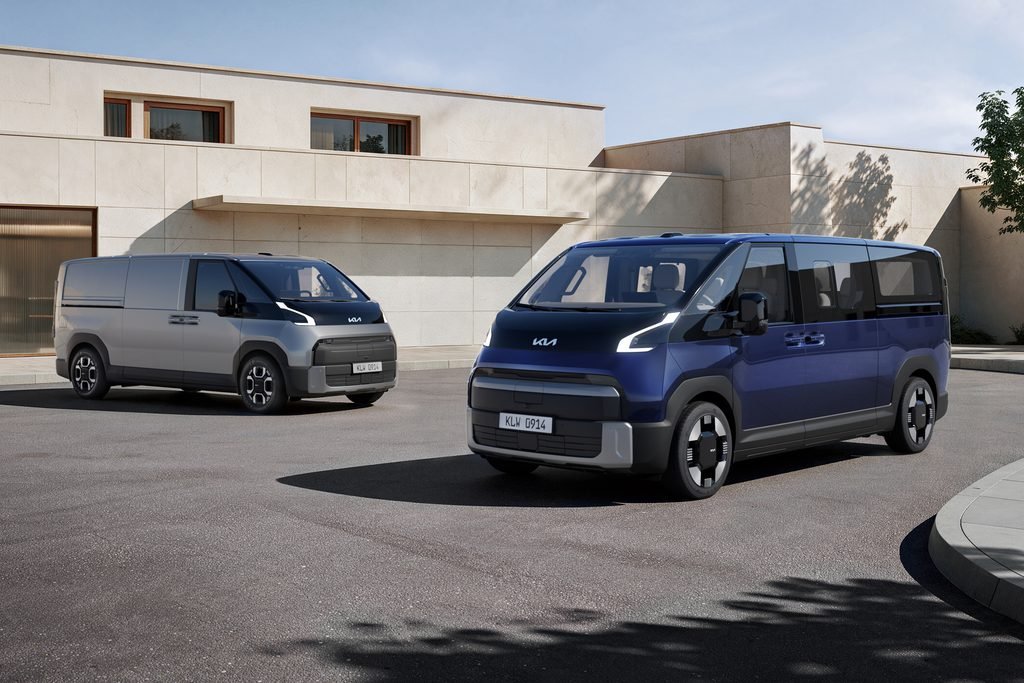
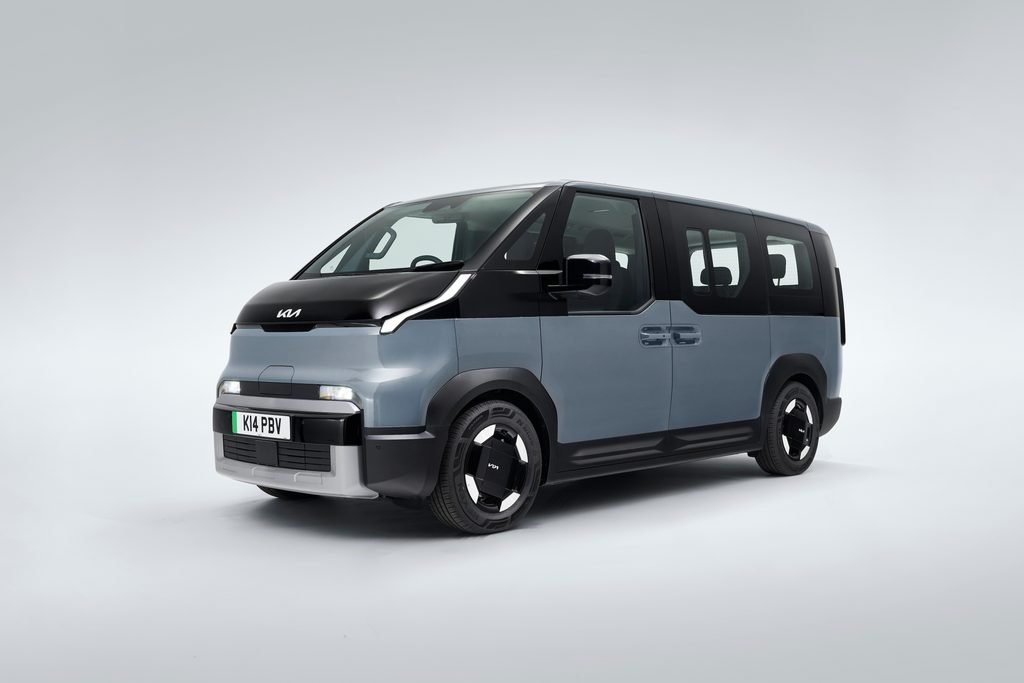
Big news for convertors, Kia has pulled the covers off the PV7 at this years IAA Transportation, a new electric van designed to carry people, cargo, or a bit of both. This Ford Transit Custom/ VW Transporter competitor is the second model in the company’s Platform Beyond Vehicle (PBV) range, following the smaller PV5, and is aimed at businesses that need a flexible workhorse rather than a van built for just one task but here at The Camper Den we see another opportunity….
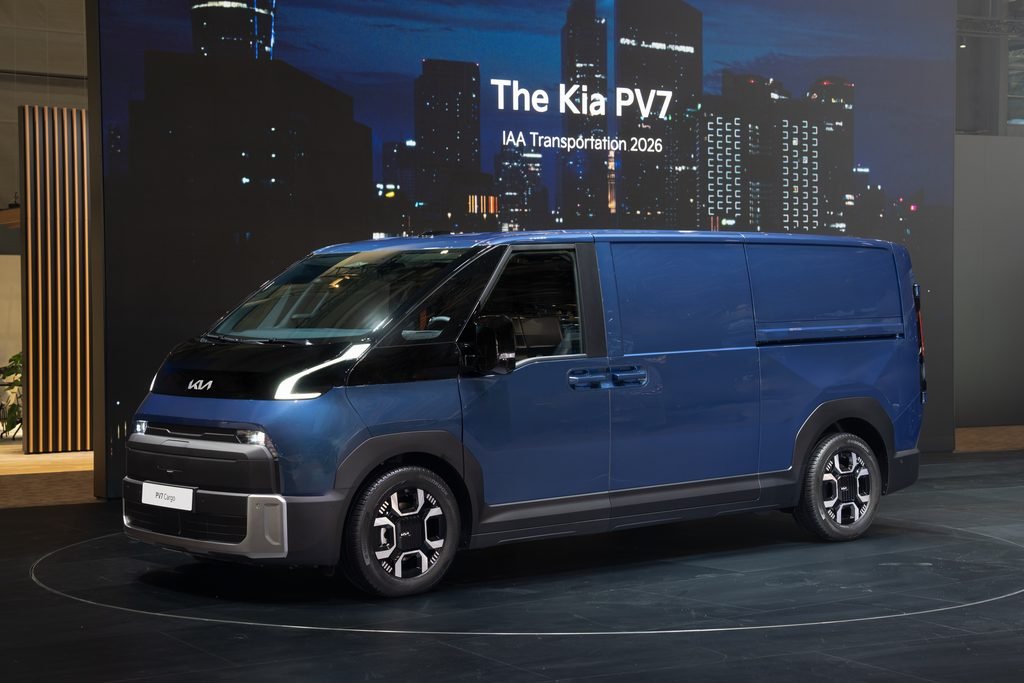
The PV7 comes in Cargo and Passenger versions, with a flat floor and a range of layouts designed to suit different jobs. Kia describes its approach as a “Tool Box”: start with a roomy, adaptable vehicle, then configure it for the work it needs to do. That could mean parcel deliveries, trade work, shuttle services, crew transport, family use and of course camper conversions!
There’s still a wait ahead. Kia plans to launch the PV7 in Korea and Europe in the second half of 2027, with other markets and versions to follow.
Cargo space for workdays
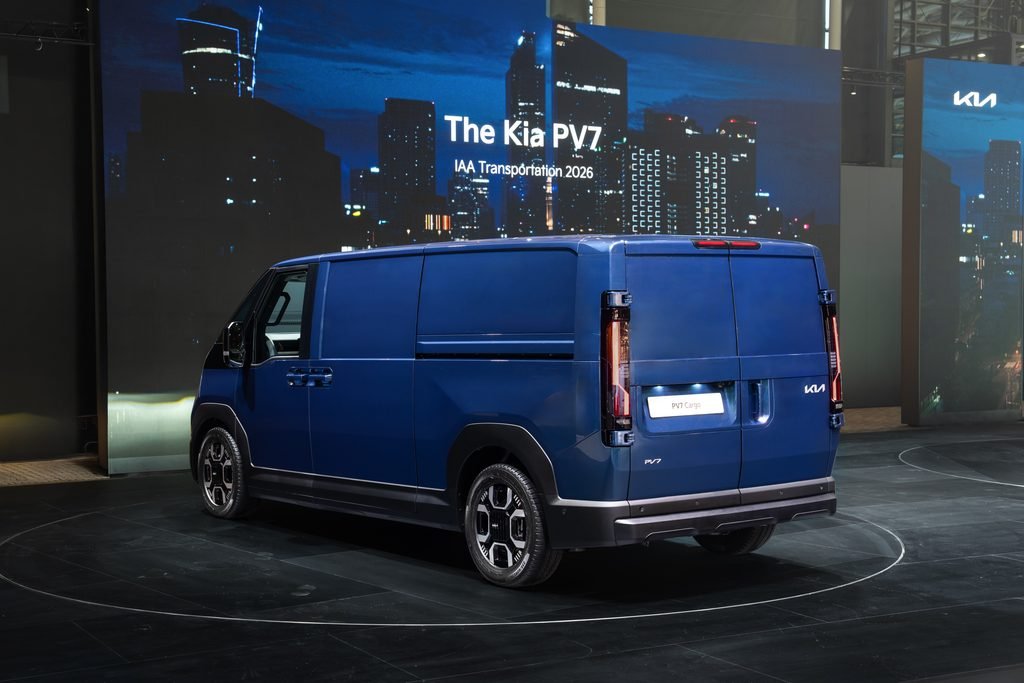
The PV7 Cargo is the version aimed at delivery firms, fleets, trades and small businesses. Kia says the range will include Compact, Long and High Roof versions, with up to 8 cubic metres of cargo space in the High Roof model. The Long version is quoted with a maximum payload of up to 1,165kg, while the Compact can carry up to 1,200kg, depending on configuration.
The Long Cargo’s 550mm loading height gives great access, which is an excellent feature of the PV5. Buyers will be able to choose different floor materials to suit their work, along with either a tailgate or twin-swing rear doors.
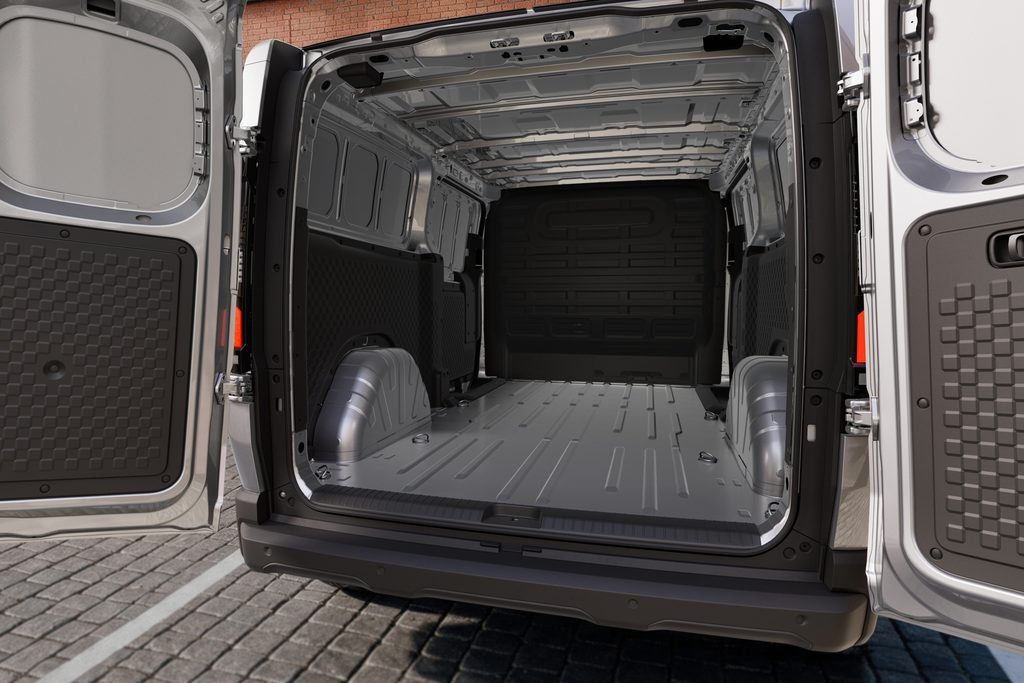
There are a few thoughtful features, drivers will also be able to check cargo-door status remotely. Kia says the powered sliding door can close automatically when the driver walks away with the smart key. A dedicated heavy-load driving mode is designed to adjust the van’s behaviour to changing payloads, helping it stay stable when carrying heavier loads.
A passenger van that can change its layout
The PV7 Passenger is aimed at shuttle and rental companies, tourism operators, crew transport and families who need more seats. Kia says it will accommodate up to nine people in most markets, with an 11-seat version planned for Korea.
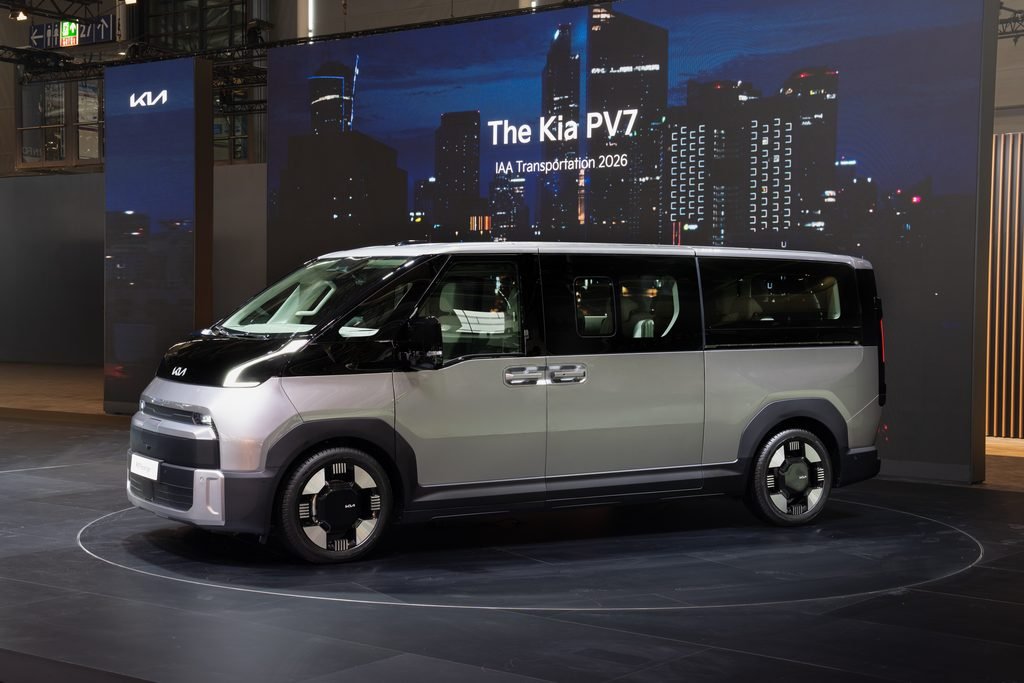
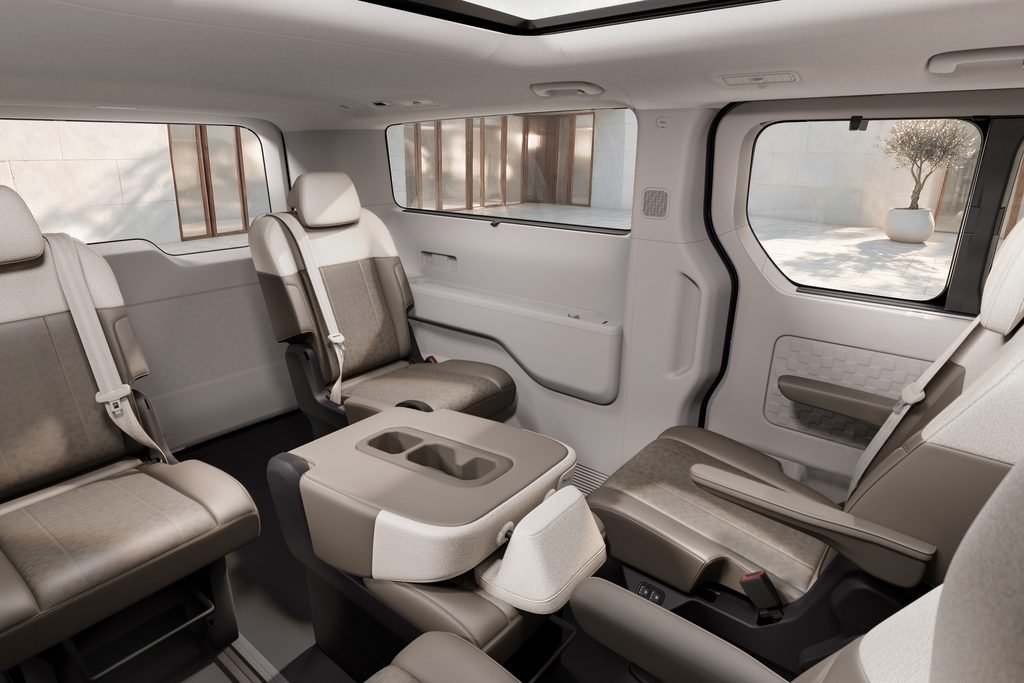
There will be different seating arrangements, including a seven-seat model with removable seats mounted on long rails. That should let owners adapt the cabin to the day’s needs, whether that means carrying passengers, luggage or bulky equipment. The nine-seat version will be offered with or without a fourth row, giving operators another way to balance seating and space.
Passenger comfort gets a bit more attention here than in the Cargo. Rear climate controls are integrated into the roof, while USB-C charging ports and additional storage are available. Kia also mentions optional power-sliding doors, which could make boarding easier when the van is being used for regular passenger services.
Inside, the Passenger model is intended to feel more like a comfortable lounge than a bare commercial vehicle. Two-tone trims, optional ambient lighting and enclosed storage give it a more finished feel. An optional centre console can also serve as a table during breaks.
Electric range and charging
The PV7 will be available with 71.5kWh and 96.2kWh battery packs. Kia says the Long Range Cargo model is expected to manage more than 460km on the WLTP test cycle, although range will vary by body style, battery and equipment.
Front-wheel drive will be standard, with an all-wheel-drive version planned for later. The electric powertrain is quoted at up to 200kW and 420Nm of torque, depending on the market and configuration.
Kia has given the PV7 an 800-volt electrical system, which is designed to reduce charging stops. With a 350kW DC fast charger, Kia says a 10-to-80 per cent charge should take somewhere in the mid-20-minute range. That figure is still marked as to be confirmed, so it’s best treated as an early estimate rather than a final real-world promise.
One unusual addition is a choice of two charging ports: a front AC/DC port and an optional AC port at the rear side. The idea is to give drivers more options when parking beside chargers in different locations.
The PV7 will also have vehicle-to-load (V2L) capability, allowing it to supply power to tools, equipment and other devices through outlets inside or outside the van, great for off grid camping too.
A practical cabin with modern tech
Physical controls for frequently used functions sit alongside a large touchscreen, so drivers won’t need to rely on menus for every adjustment.
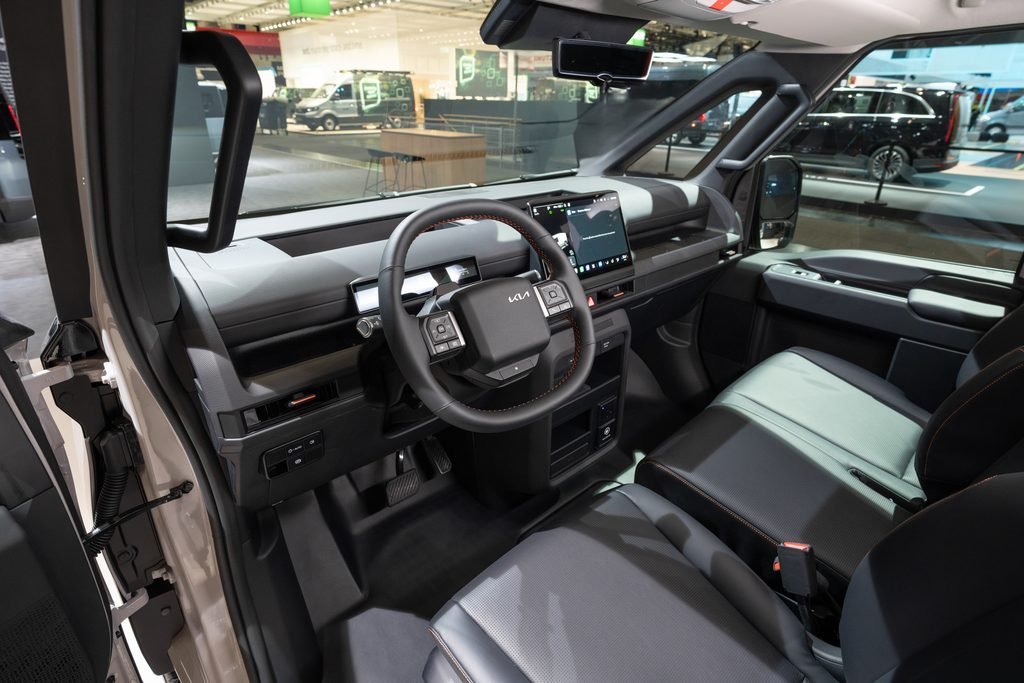
The PV7 gets 12.9-inch and 14.6-inch displays, depending on configuration, and Kia’s Pleos Connect infotainment system. Based on Android Automotive, it includes connected navigation, flexible screen layouts, an app marketplace and over-the-air updates. Kia also says an AI voice assistant will let drivers control vehicle, navigation and messaging functions using natural language. Physical controls for frequently used functions sit alongside a large touchscreen, so drivers won’t need to rely on menus for every adjustment.
Built to be adapted
Kia plans to expand the PV7 range to 23 variants, including different Cargo and Passenger bodies, a chassis cab and a selection of conversions. The company says it is developing a system that will let conversion equipment be controlled from inside the vehicle, and that its dedicated PBV factory and conversion centre will support both standard and specialist versions.
That flexibility is central to Kia’s pitch. Rather than asking customers to make do with one van layout, the PV7 is meant to form a base for different jobs and operating needs. Whether that translates into a useful range of conversions—and how much they’ll cost—will become clearer closer to launch.
The PV7 also gets a more upright, squared-off shape than a typical passenger car, with a flat roofline and large windows. Kia says the styling is intended to maximise interior space and make the van easier to use. Replaceable bumper corners, wheel-arch sections and door cladding are designed to simplify repairs, which is a super useful design element.
For now, the PV7 is a preview of Kia’s next step in electric vans. Its range of layouts, low loading height and proposed conversion options give it potential beyond simple parcel work. We’ll know more about pricing, final specifications and which versions reach the UK as the 2027 launch gets closer.